


Primary Care Update – W/C 26th October 2026
AI Complaints Management: The New Challenge Facing General Practice
Welcome to this week’s Primary Care Update, providing an overview of the latest developments affecting general practice and primary care services across the United Kingdom. As we approach the end of October, practices continue to face significant pressures from increasing workloads, workforce challenges and changing patient expectations. One emerging issue receiving particular attention this week is the growing use of artificial intelligence to help patients prepare and submit complaints to GP practices.
As technology continues to change how patients communicate with healthcare providers, practices need practical and sustainable ways to manage this additional workload. This week’s update explores the challenge of AI-generated complaints and how effective complaints management can help practices protect staff time, maintain appropriate responses and continue focusing on patient care.
A New Challenge for GP Practices
AI Complaints Management is becoming an increasingly important issue for general practice as patients gain easier access to artificial intelligence tools that can produce detailed, structured and highly formal complaints within minutes. Artificial intelligence can be extremely useful for patients who want to organise their thoughts, improve spelling and grammar, or explain their experiences more clearly. The Parliamentary and Health Service Ombudsman has also published guidance explaining how people can use AI to help write complaints while encouraging users to check that the content remains accurate and reflects their own experience.
However, there is another side to this development. GP practices are increasingly having to manage complaints that can be significantly longer and more detailed than traditional patient correspondence. Some complaints may contain multiple issues, lengthy explanations, formal language, references to policies and detailed requests for information. For practices already dealing with significant administrative pressures, this creates another challenge. AI Complaints Management is therefore becoming an important consideration for practices looking at how they manage their workload.
AI Is Changing the Way Patients Make Complaints
Patients have always had the right to complain about NHS services, and complaints remain an important part of improving healthcare. A complaint can identify a communication problem, highlight a service failure or provide valuable insight into a patient’s experience. AI does not change that principle. What it can change is the format, length and presentation of the complaint.
A patient who previously wrote a short letter explaining what happened can now use an AI tool to turn a few paragraphs of information into a highly structured document. Recent reporting has highlighted concerns about AI-generated complaints becoming unnecessarily long and complicated, with some GPs receiving complaints that extend to many pages.
For a practice, a longer complaint does not necessarily mean a more serious complaint. However, every allegation still needs to be considered properly. Practice staff may need to establish what actually happened, identify the people involved, review clinical records, obtain statements and consider whether the complaint raises any patient safety concerns. The additional volume of information can make that process more time-consuming.
This is where effective AI Complaints Management can make a practical difference. Rather than allowing the length of a complaint to determine the amount of pressure placed on the practice, a structured process can help identify the key issues and ensure that the appropriate information is gathered.
Why AI-Generated Complaints Can Create Additional Work
The main issue is not that patients are using AI. The issue is the amount of work required to review the information that AI can produce. AI-generated documents may include lengthy explanations, formal language, multiple questions and references to legislation or policies. Some may also contain assumptions or information that does not accurately reflect what happened.
The Parliamentary and Health Service Ombudsman advises people using AI to check that their complaint is accurate and based on their own experience. It also advises against asking AI to add legal arguments or formal legal language simply to make a complaint appear more official.
For GP practices, this means complaints teams need to separate the important information from the additional material and identify the actual issues that require investigation. The fundamental questions remain the same regardless of how a complaint has been written: what happened, when did it happen, who was involved, what records need to be reviewed and what outcome is the patient seeking?
A strong AI Complaints Management process can help practices work through this information in a consistent way while ensuring that the substance of the complaint remains the focus.
Complaints Are Already a Significant Responsibility for Practices
Complaints management is not something practices can simply put to one side. Where a complaint is made directly to a practice, the practice has responsibilities for managing the process appropriately. The BMA notes that practices have contractual responsibilities around complaints and that an official complaint should be acknowledged within three working days.
That means complaints require proper organisation from the moment they arrive. Someone needs to monitor the complaints inbox, acknowledge the complaint, establish what it concerns and coordinate the investigation. Statements may need to be obtained from staff, clinical records may need to be reviewed and the response needs to address the issues raised. Once the response has been completed, the practice may also need to consider whether there are learning or improvement actions.
For a small practice, this can represent a substantial amount of staff time. When the complaints workload increases in length and complexity, the pressure becomes even greater. This is why AI Complaints Management should be considered as part of wider practice workload planning.
The Hidden Cost of Managing Complaints
One of the biggest problems with complaints management is that the workload can be difficult to see. A complaint might initially appear straightforward, but once the investigation begins, staff may spend hours reviewing records, speaking with colleagues, checking dates, understanding correspondence and preparing a response.
Longer complaints can make this process even more demanding because staff need to identify the key issues within a larger amount of information. The practice may need to distinguish between several separate concerns, identify which staff members need to provide information and ensure that the final response addresses the relevant points.
This can place additional pressure on practice managers and administrative teams. It can also take staff away from other responsibilities at a time when general practice is already dealing with workforce pressures, increasing patient demand and substantial administrative workloads.
The challenge is therefore not simply responding to complaints. It is managing them efficiently while maintaining a fair, thorough and patient-focused process. Effective AI Complaints Management can help practices create a more structured approach to this workload.
AI Complaints Management Can Help Practices Regain Time
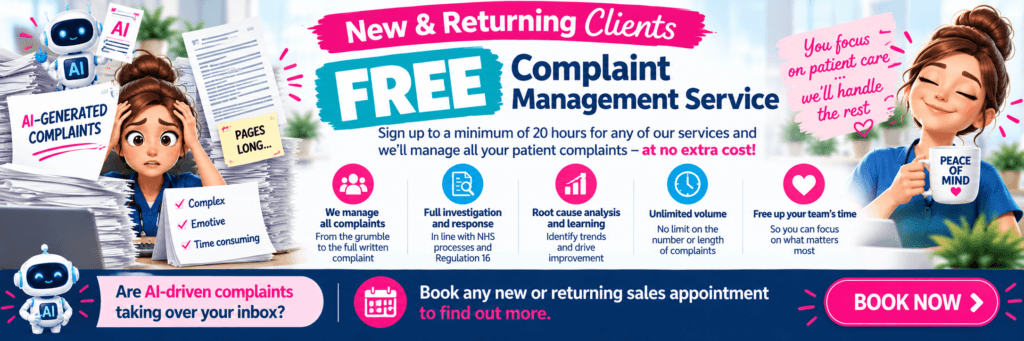
This is where General Practice Solutions can support practices. GPS offers a Complaints Management Service as a free additional service when a practice takes up any other GPS service. The service is designed to take much of the complaints administration away from the practice team, allowing staff to concentrate on their day-to-day responsibilities.
The process is straightforward. The practice provides access to the relevant complaints inbox, allowing our team to monitor incoming complaints and manage the correspondence on behalf of the practice. Where appropriate, our employee can respond to complaints, gather the information required and liaise with the practice’s internal staff when further clarification or investigation is necessary.
The purpose is not to remove the practice from the complaints process. Instead, it provides practical support around the administrative and communication workload involved in managing complaints. This allows the practice to retain oversight while having additional support available to progress complaints efficiently.
For practices considering AI Complaints Management, this approach can provide additional capacity without requiring the practice to recruit another member of staff specifically to manage complaints.
Turning a Growing Problem Into a Manageable Process
One of the biggest advantages of outsourcing complaints management is consistency. Complaints can arrive at any time, and they can vary considerably in length and complexity. Some may be short and straightforward, while others may contain multiple issues and require detailed investigation.
Having a dedicated team manage the initial process means complaints can be organised, reviewed and progressed systematically. This can help prevent complaints from becoming buried within a busy practice inbox, particularly when practice staff are already managing large volumes of other correspondence.
It can also provide greater visibility for practice leaders. They can have a clearer understanding of what complaints have been received, what stage each complaint has reached and where further information is required. This can support better governance and make it easier to identify recurring issues.
AI Complaints Management is therefore not simply about dealing with AI-generated letters. It is about creating a complaints process that can cope with changing patient communication while remaining efficient and organised.
Complaints Should Lead to Learning, Not Just More Administration
A complaint should not simply become another document that needs to be closed. It can provide valuable information about the patient experience and may identify opportunities for improvement.
Patterns can emerge when complaints are reviewed properly. Patients may repeatedly report difficulties contacting the practice, unclear appointment information, problems understanding referrals or communication issues between different teams. These patterns can provide valuable information for practice managers and clinical leaders.
Effective complaints management can therefore support wider quality improvement. The NHS complaints process exists partly to ensure concerns are taken seriously and used to improve services. For primary care, this means complaints can contribute to learning when practices have the capacity to review them properly.
A well-managed complaints process should therefore achieve two things: it should provide an appropriate response to the individual patient while also helping the practice understand whether there are wider issues that need addressing.
Free Complaints Management as an Added GPS Benefit
At General Practice Solutions, we recognise that practices are already managing significant workloads. That is why our Complaints Management Service is available free of charge as an additional service when a practice uses any other GPS service.
The process is designed to be simple for the practice. The practice provides access to the relevant complaints inbox, and our team can then manage incoming complaints, prepare responses where appropriate and liaise with the practice team when additional information is required.
This gives practices an additional layer of administrative support without requiring them to manage every stage of the complaints process internally. It also means practice staff can retain involvement where their clinical or operational knowledge is needed, while our team takes responsibility for progressing the correspondence.
For practices already using another GPS service, this provides an opportunity to receive additional complaints management support without adding a separate charge for the service. It is designed as an added benefit of working with GPS rather than as a standalone complaints service.
Why Practices Should Prepare for the Growth of AI-Generated Correspondence
The growth of AI-generated correspondence is unlikely to disappear. AI tools are becoming easier to access, and patients are increasingly using them to communicate with organisations. Practices should therefore consider how their complaints processes will cope with increasingly detailed correspondence.
This does not mean practices should view AI as the enemy. AI can help patients articulate their concerns and communicate their experiences more clearly. The challenge is ensuring that practices have processes capable of managing the additional information efficiently.
The solution is not to make it harder for patients to complain. Patients must continue to have an accessible route for raising concerns. Instead, practices need to make their internal complaints management process more efficient, organised and sustainable.
AI Complaints Management provides one way of approaching this changing environment. By having a dedicated process and appropriate support, practices can focus on the substance of complaints rather than becoming overwhelmed by the volume or format of correspondence.
The Management Message: Give Your Team Back Valuable Time
The rise of AI-generated complaints is another example of how technology is changing primary care. For patients, AI can make it easier to communicate their experiences. For practices, it can mean longer documents, more information to review and additional administrative workload.
Every complaint still deserves to be considered properly, regardless of how it was written. Practice teams should not have to choose between managing complaints effectively and keeping up with the rest of their workload.
This is where external support can make a real difference. General Practice Solutions provides Complaints Management free of charge as an addition to any other GPS service. By giving our team access to the relevant complaints inbox, practices can allow us to manage incoming complaints, prepare responses and liaise with in-house staff when further information is required.
The objective is not simply to reduce paperwork. It is to give practice teams back valuable time and provide a structured process for managing complaints.
As AI continues to change how patients communicate with healthcare providers, practices need processes that can keep pace. AI Complaints Management is becoming an important part of that conversation, particularly for practices already facing significant administrative and workforce pressures.
General Practice Solutions can support practices with that workload while allowing their teams to keep their focus where it belongs: on delivering safe, effective and patient-focused care.
Tuesday Talks: Your Weekly Insight into Primary Care
Stay up to date with the latest developments in primary care with Tuesday Talks — our weekly series for healthcare professionals. Each episode highlights current industry news, NHS policy changes, and what these mean for general practice.
We also showcase how General Practice Solutions (GPS) is supporting practices with innovative services designed to meet today’s challenges. Whether you need expert commentary or practical guidance, Tuesday Talks provides timely, relevant content to keep you informed and prepared.
Watch the latest episode below and stay ahead in a fast-changing healthcare landscape.
Workforce Wednesdays: Practical HR Insights for Primary Care
Workforce challenges continue to shape the daily reality of primary care, and therefore Workforce Wednesdays provides a weekly series that explores the HR issues that matter most to NHS practices — from absence management and contractual changes through to employment law updates and staff wellbeing.
In each episode, you will not only find clear, practical guidance
e but also step-by-step support to help practice leaders manage staffing pressures with confidence. The content addresses both immediate concerns, such as day-to-day rota gaps, and longer-term workforce strategies, while also offering insights tailored specifically to the primary care setting.
Welcome to Thoughtful Thursday, our weekly series celebrating the uplifting and inspiring moments from across primary care. In addition, each episode highlights stories of innovation, kindness, and community spirit that together showcase the very best of general practice.
This week, you will discover a moving story of compassion and real-world impact; moreover, it serves as a reminder of the dedication and resilience at the heart of our sector.
Ultimately, Thoughtful Thursday is a must-watch for anyone who believes in the power of care.


